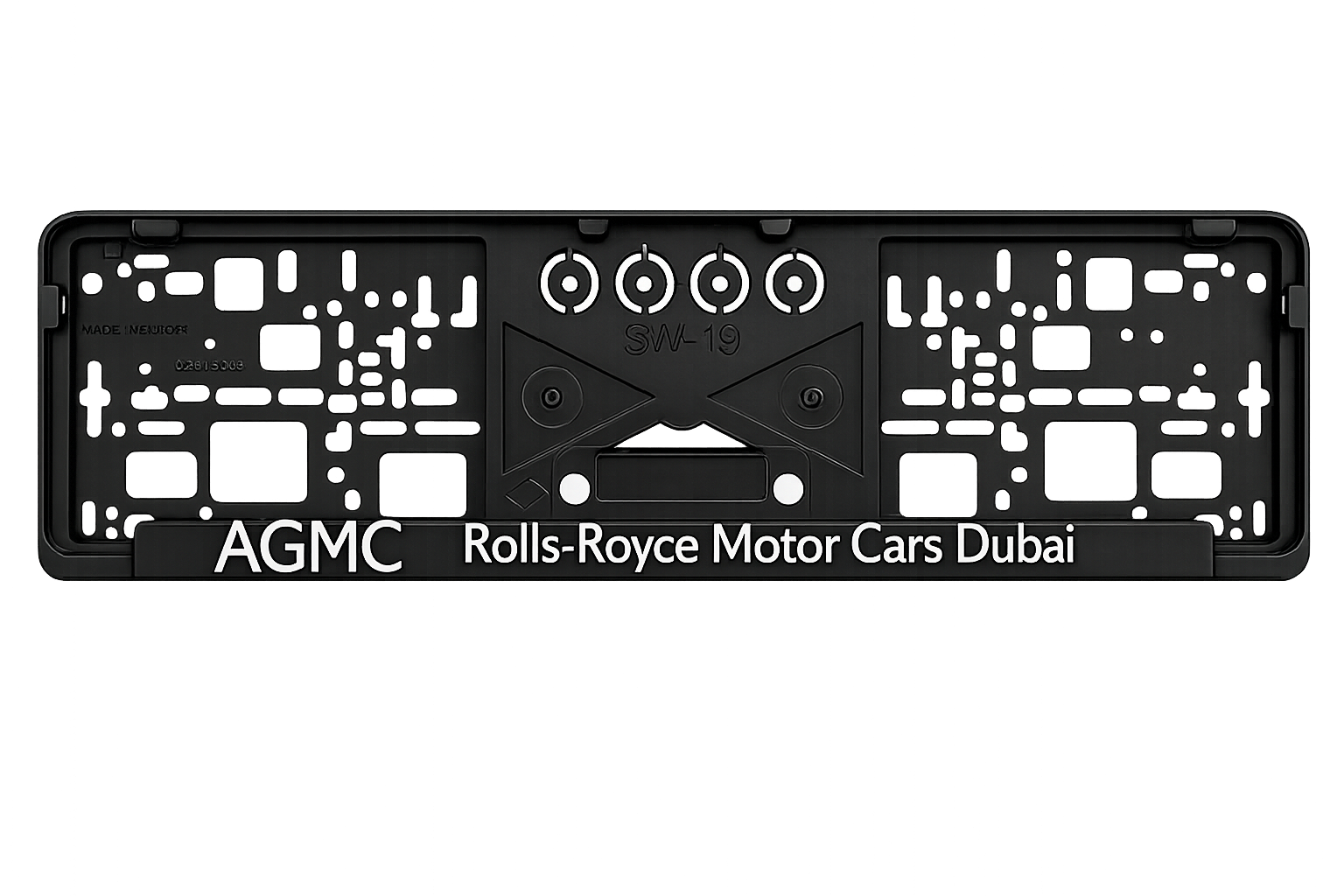
Two plate holders can look almost identical on a showroom shelf and behave completely differently a year later on the road. The gap is in the materials and the finishing, the parts a buyer cannot see at a glance. This article breaks down what actually makes a premium number plate holder, so you can tell engineering from marketing.
The anatomy of a premium plate holder
A plate holder has only a few components, the moulded frame, the branding finish, the fixings and the surface treatment, but each one is an opportunity to cut corners or to build quality in. Premium frames get all four right; budget frames usually compromise on at least three.
Recycled polymer: strength and sustainability
The frame itself is the foundation. High-grade recycled polymer delivers the rigidity needed to hold a plate securely while resisting the brittleness that causes cheap frames to crack. It also carries a sustainability advantage: reusing material reduces waste without weakening the part, which is increasingly important for dealer groups and OEMs that report on environmental commitments. The key is that the polymer is engineered for strength and heat-stability, not simply the cheapest plastic available.
German-imported foils and colours
Branding is where quality becomes visible. The premium standard uses foils and pigments imported from Germany, applied so the dealer wordmark stays crisp and high-contrast for years. Lesser frames rely on printed labels or stickers that fade, peel and curl, often within a single Gulf summer. A foil-embossed finish is the single clearest signal that a holder was built to last.
If the logo is a sticker, assume the rest of the frame was built to the same standard.
Finishing and adhesion
Finishing is the step most buyers never think about and most cheap suppliers skip. Proper surface preparation and adhesion ensure the foil bonds permanently to the polymer and the fixings stay secure through years of vibration and washing. When finishing is done in-house, as part of an engineered-at-source process, it can be controlled and inspected piece by piece rather than left to chance.
Durability in Gulf conditions
UAE conditions are unusually hard on automotive accessories: intense UV, surface temperatures that soar in summer, fine dust, humidity near the coast and frequent car washes with harsh chemicals. A premium plate holder is validated against exactly these stresses, so it does not warp, yellow, fade or shed its fixings. Testing for the environment the product will actually live in is what separates a holder engineered for the Gulf from a generic frame.
How to tell premium from cheap
- Flex the frame. Quality polymer feels solid and springs back; cheap plastic feels thin and creaks.
- Check the branding. Foil-embossed and high-pigment finishes resist a fingernail; stickers and prints do not.
- Look at the fixings. Secure, well-moulded mounting points beat flimsy clips that loosen over time.
- Ask about testing. A serious manufacturer can tell you how the product performs in heat, UV and washing.
- Ask where it is made. In-house, single-facility production is far easier to hold to a standard than outsourced supply.
None of these checks take more than a minute, and together they reliably separate a frame that will still look sharp in three years from one that will embarrass the brand by next summer.